
Equipment & observation
Instruments
Understand how a reading was made.
An instrument reading needs context. This part of DisclosureOS connects the value to the equipment, settings and conditions that produced it, so others can examine the measurement.
Explore how instruments workExplore images, signals and survey measurements.
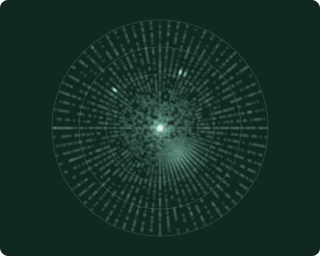 Scanning radarFollow returns across a scan
These recordings belong to one fictional case. The retained files use the name Meridian. Each capture keeps its own time and source.
How instruments work
A reading has a history
Knowing the device name is a start. To examine a measurement, a researcher also needs the configuration used during the capture and a way to find the original data.
One optical reading, from equipment to source.
- 01
Equipment
Identify the instrument and preserve its configuration. Later changes should not replace the settings used for an earlier recording.
Station northConfiguration 1 - 02
Capture
Describe when and where it recorded, which channels were active and what is known about the clock and calibration.
14 August 202621:00 UTC - 03
Reading
Connect the measured value to its source. Keep its unit and uncertainty with it, so a reader can interpret the number.
Angle above horizon: 39.92 °Source row 11
A channel is one stream of values from an instrument. A single device can provide several channels, each with its own quantity, unit and sampling rate.
Recording collection
Explore the recording collection
Explore the range of the DisclosureOS example case. Choose a recording to inspect its values and follow them to the original file.
Cameras & images
Signals & events
Conditions & measurements
Field & survey views
Files & availability
These examples show several captures within one fictional case. They do not all share a clock, location or subject.
Recording context
Context that stays with a recording
The picture or plot is only part of a recording. These details help a researcher understand how it was made, what its values mean and where to find the source.
Equipment & configurationIdentify the device and the settings used
- Manufacturer, model and serial number, with missing identity information stated explicitly
- Hardware, firmware and configuration revisions
- The exact configuration used for each capture, preserved when settings change
Channels & measurementsExplain what each stream of values represents
- The quantity measured, its unit and the sampling rate
- A measurement’s uncertainty and coordinate system, when relevant
- Links from a selected reading to its channel and original source
Deployment, timing & conditionsDescribe where and when the equipment was used
- Deployment site and operating period
- Capture start and end, the time scale and clock source
- Clock synchronization, resolution and uncertainty recorded separately
Calibration & reviewKeep the method and its limitations available
- The instrument, configuration and channel covered by a calibration
- Method, date, stated validity period and supporting report
- Reported uncertainty and whether the calibration has been reviewed
Original files & processed resultsKeep a route back to the captured data
- Original recordings in their native formats, with file type, size and fingerprint
- Links between a capture, its source files and measurements derived from them
- Precise source locations such as rows, video frames or array positions
Timing & limits
A shared timeline is not a clock check
Two recordings can appear on the same timeline without their clocks having been checked against each other. Keep that distinction visible when comparing them.
Field readings
These fictional readings include the clock details needed to interpret their timestamps.
- Clock source
- Synthetic UTC clock
- Resolution
- 1 s
- Clock uncertainty
- 0 s Example value
A zero in fictional data does not demonstrate perfect timing in physical equipment.
Thermal recording
This fictional thermal recording has timestamps, but its clock resolution and uncertainty were not supplied.
- Clock source
- Authored UTC clock
- Resolution
- Unknown
- Clock uncertainty
- Unknown
Unknown does not mean zero. A viewer’s playback time cannot fill this gap.
File checks can establish that the retained bytes match their recorded fingerprint. Assessing the equipment, calibration and interpretation still requires review.
Explore the thermal recordingExplore or build